.


Search Box
Manaslu Climbing Expedition | Summit Climb
Manaslu
Manaslu Main
Cost
Itinerary
Route
Personal & Team Equipment
Leadership
Your Experience & Training
Questions
Photo Gallery
Video Clips
Application (Int)
Application (US)
Manaslu at sunset as seen from basecamp (Samuli Mansikka).
  • Full service includes: Sherpas, hotels, trek to basecamp (bc), ropes, good food on trek, in bc, & climb, group climbing equipment, tents, radios, satphones, etcetera.
  • Leader: Dan Mazur, 8000 metre expedition expert: over 20 years experience leading climbs & treks in Nepal & Tibet.  
  • World's eight highest & most accessible 8000 metre/26,200 foot peak in Nepal. High altitude "easy" snow climb.
  • Bring your skiis and snowboard for exciting big mountain skiing and boarding.
  • Climbing Manaslu qualifies you for Everest from Tibet, Everest from Nepal or Lhotse .
  • Trek to basecamp experiencing the unique culture of Nepal off the beaten path.
  • We help you buy and rent inexpensive mountain climbing, trekking, hiking, and walking gear, equipment, clothing, boots, shoes for sale, purchase and hire at affordable, cheap, low prices. 
  • Dates and cost:
    • 1 September to 15 October. 45 days in Nepal.
    • Full Service Cost: $12,850, £8250, €10,450; Basic Climb Cost: $6250, £3950, €4750.  Currency conversions 21-Feb-12.
    • Please Click Here
    • Please click the logo for payment options including credit card, cheque, bank transfer, etcetera.
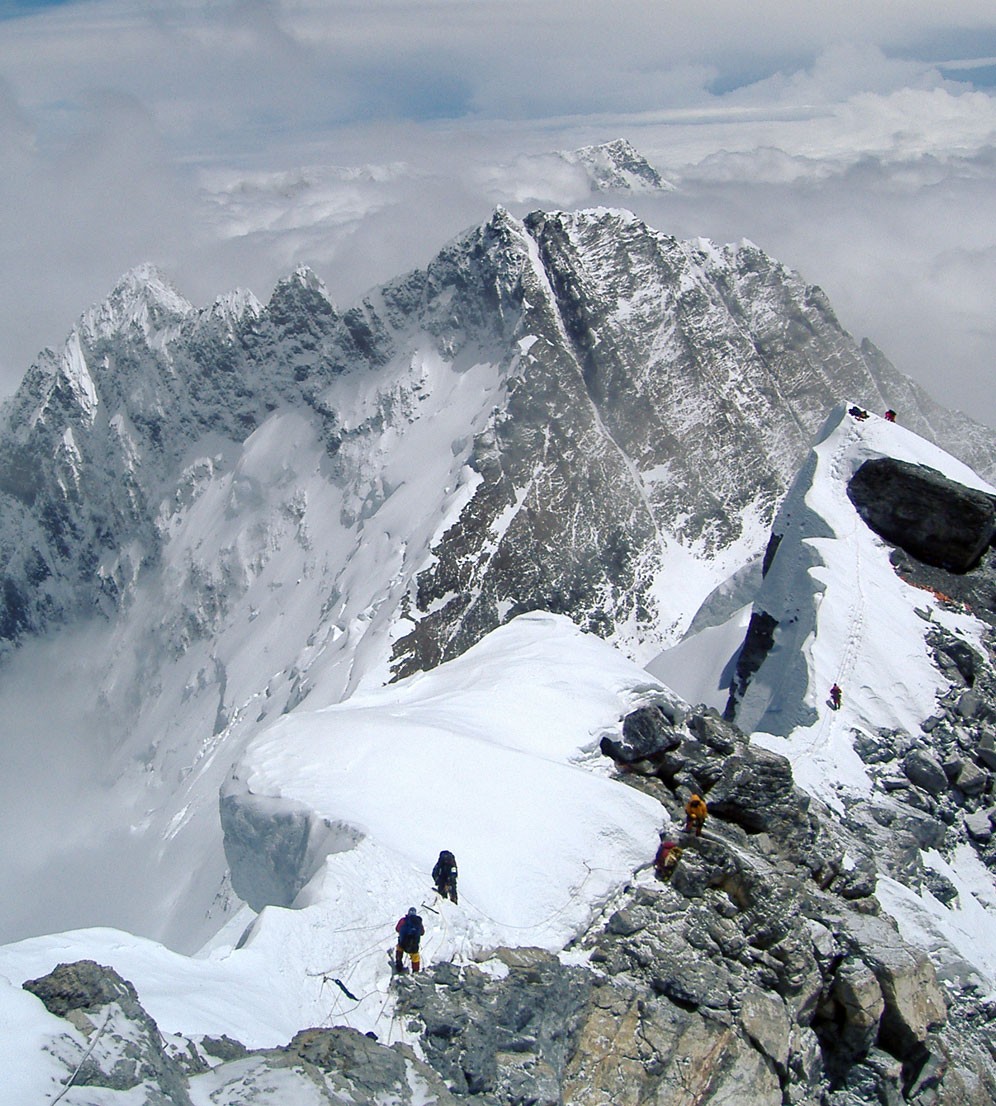
Please click one of the links below to view that section of our introductory information or just scroll down (photo by Samuli Mansikka: looking down the summit ridge of Manaslu).

Manaslu Programme Description:

  • Introduction: Mount Manaslu at 8156 metres/26,759 feet is the eighth highest mountain in the world, and is located in the Mansiri Himal, part of the Nepalese Himalayas, in the west-central part of Nepal. Its name, which means "Mountain of the Spirit", comes from the Sanskrit word Manasa, meaning "intellect" or "soul". Manaslu was first climbed on May 9, 1956 by Toshio Imanishi and Gyalzen Norbu, members of a Japanese expedition (photo by Samuli Mansikka: climbing above camp 1). 
    • Our proposed schedule allows for a careful and safe ascent, as well as multiple full descents to basecamp and/or a lower village.
    • The style of climbing is cautious and well-timed, with excellent leadership, organization, Sherpa climbers, 'walkie-talkie' radios, satellite telephones, the best oxygen bottles and apparatus available, cooks and waiters, tasty food, the best equipment, individual tents for each member in basecamp, a full kitchen in basecamp, 4 camps on the mountain, 1000s of metres of fixed line, hundreds of rock, ice and snow anchors, top-quality high altitude tents and high altitude stoves, expedition mix gas, and full safety equipment: medical oxygen, gamow bag, and extensive medical kit. Base camp has an excellent high-altitude medical clinic with a doctor on staff .
    • Bring your skiis and snowboard for some fun high mountain skiing and boarding.
    • This expedition maximizes experience gained over prior Manaslu expeditions with a strong record of reaching the top of our world's highest peaks. In addition to more than 25 Himalayan expeditions we have an intimate knowledge of the Nepalese officials who regulate the permit system, liaison officers, sherpas, cooks, yak drivers, and hoteliers/restaurateurs. back to top
  • Leader and staff: In Kathmandu, during the trek, in basecamp, and on the climb, our experienced staff is with you all of the way. Our helpful climbing sherpas are some of the best. They are real high-altitude star-performers and very friendly. Our western leader is a highly experienced, friendly, and well-organized professional with multiple ascents of Manaslu. Skillful basecamp cooks prepare delicious, fresh, tasty food and hot drinks at least 3 times a day.
    • On trek: Our western leader, together with friendly and helpful sherpas, cooks and local people leading yak caravans carry all of your personal equipment, group equipment, and set up camp each day, prepare and serve delicious meals, so you can relax and enjoy the trek. You do not need to carry a heavy rucksack during the trek (photo by Samuli Mansikka: our comfortable basecamp).
    • Our comfortable basecamp: Our cooks and waiters will serve you delicious meals in our heated dining tent.
    • On the mountain: Our western leader and group sherpas will fix the route, set up high camps and carry group equipment, such as tents, stoves, etc. If you wish to help out, we welcome you to do so, otherwise just relax and focus on getting well acclimated and achieving your goals. You may not need to carry a heavy rucksack during the climb.
    • Sherpas: We have many group sherpas to help the team. For an additional expense, we can also provide personal sherpas and climbing-guides to individual members who wish to have their own private sherpa. We now encourage members who wish to have a lighter rucksack to hire a 1/4 of a sherpa to help with high altitude equipment transport, carrying your extra weight both up and down the mountain. For information about hiring a personal sherpa, please contact us. back to top
  • Manaslu National Park: Unlike many other regions in Nepal, this valley is a sanctuary to many highly endangered animals, including Snow Leopards and Pandas. Over 110 species of birds, 33 mammals, 11 butterflies and 3 reptiles have been recorded. Conservation of wild life in the area has been achieved by monks of the monasteries in the area by putting a hunting ban in place. This action has helped the wildlife to prosper. The area is now an important habitat for the snow leopard, grey wolf, musk deer, blue sheep and the Himalayan Thar. The valley basin has a rich eco diversity and includes nineteen different types of forests, most prominently Rhododendron, and also Himalayan blue pine, which is flanked by Ganesh Himal and the Sringi ranges. Medicinal herbs and aromatic plants, have also been recorded in different forests types and adjoining vegetation. Overall, the presence of 19 types of forests and other forms of dominant vegetation have been recorded from the area.Our Manaslu expedition features one of the most breathtaking treks in the world, included in the price (photo by Samuli Mansikka: trekkers crossing a suspension bridge on their way to Manaslu base camp). back to top
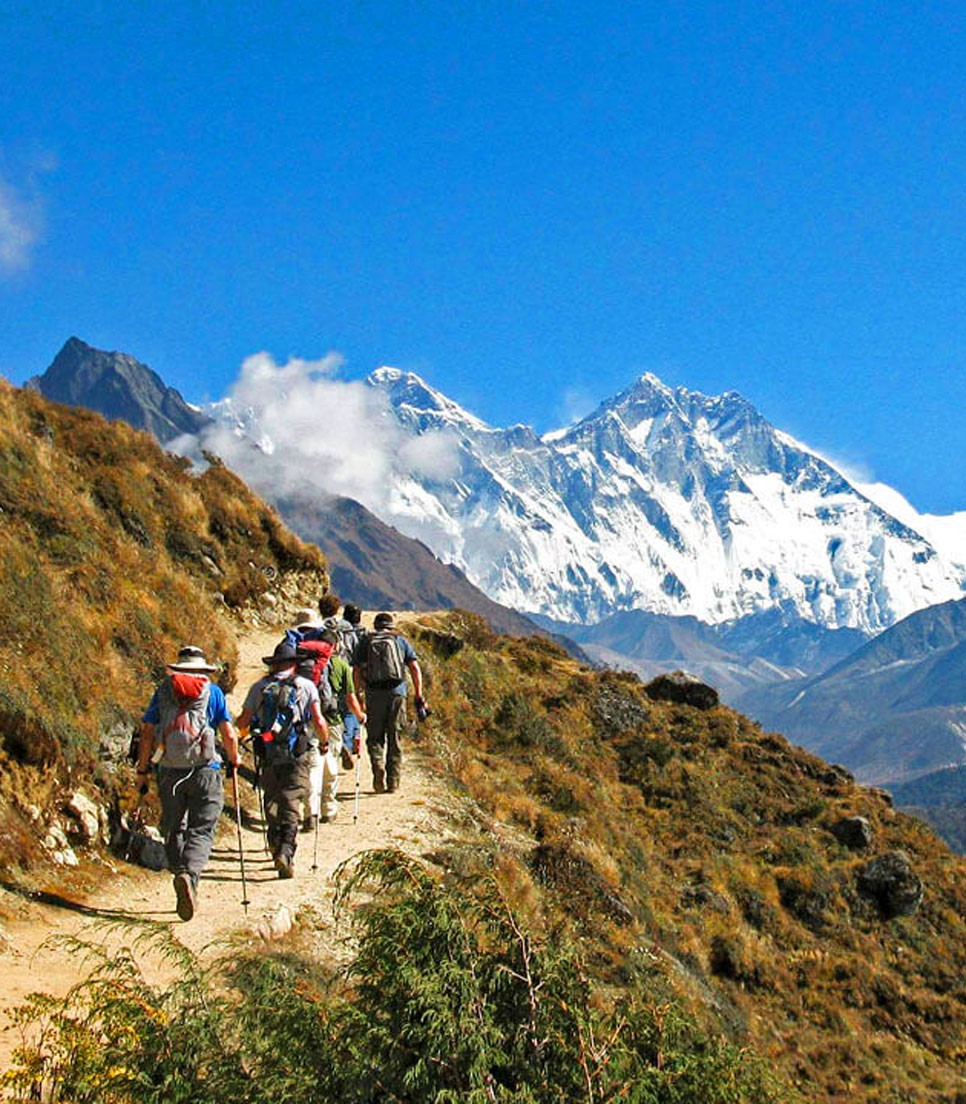
  • Trek to basecamp: This is one of the most beautiful treks in the world with ancient snow-free paths winding past green terraced villages, rushing streams crossed on swinging bridges and each night a comfortable 'teahouse' or a good tent pitched in a quiet pasture beneath the highest peaks in the world. Throughout the trek we eat delicious meals prepared by our skillful cooks. The trek will be moderately paced, allowing plenty of time for acclimatization, rest and site-seeing. The trek follows an ancient salt–trading route along the steep sided Budhi Gandaki river. From Deng, the slopes of ravines ease and views of snow peaks start appearing from Ligaon. Further from Lhogaon, an impressive view of Manaslu, with its double peak, appears described as "a soaring monarch with a double-edged summit towering above fields of barley".
  • Basecamp: Features your own private sleeping tent that will be all your own, not needing to be shared with anyone. We have comfortable, heated dining tents with tables and chairs where our cooks and waiters will serve you delicious meals.
  • Climbing to the high camps:
    • Above basecamp: The route up to Camp 1 involves climbing over grassy slopes, rock slabs and moraine, followed by a crevassed glacier with occasional small ice steps to Camp 1 at 5700 metres/18,700 feet.
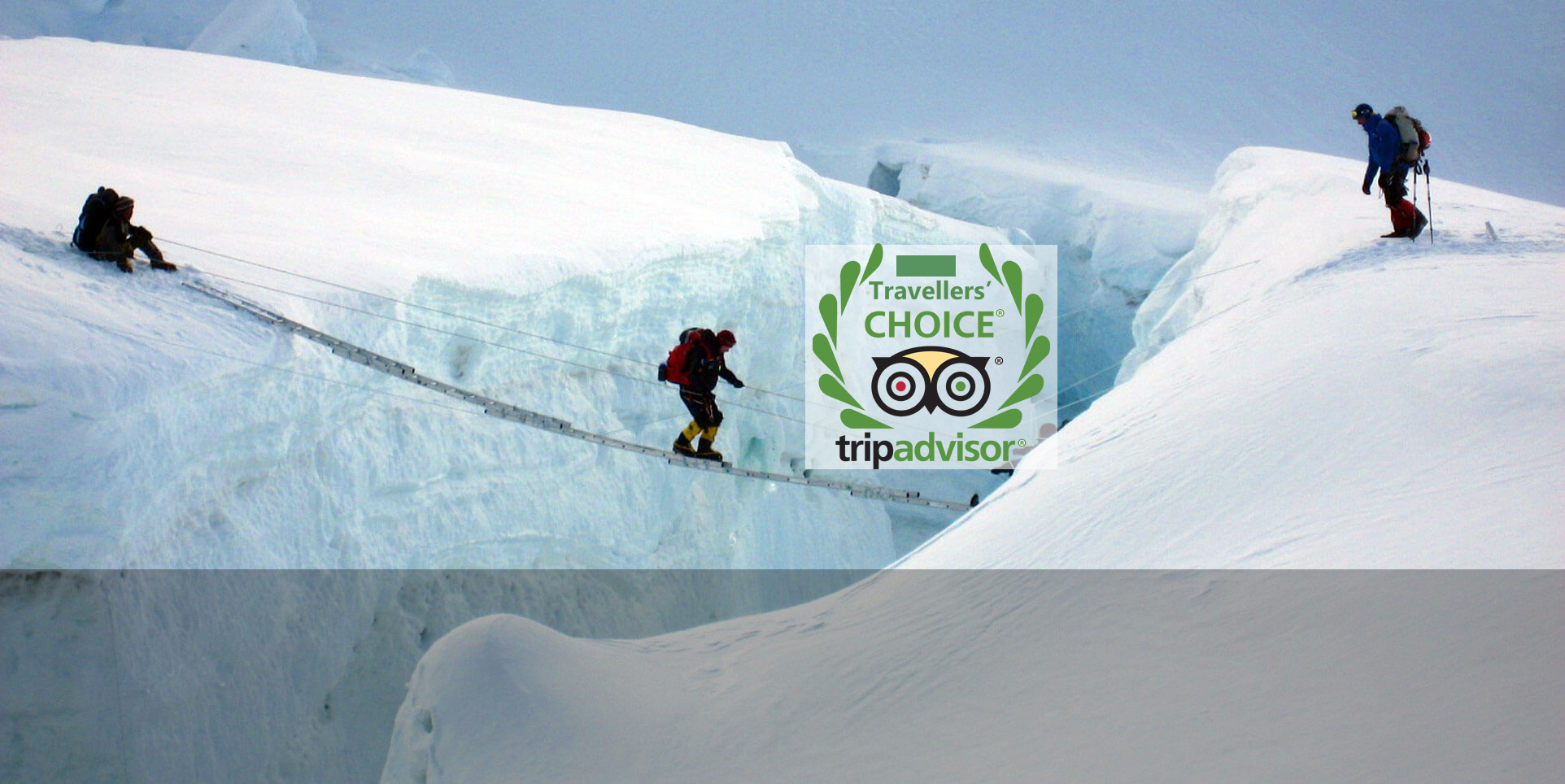
    • From camp 1: The route to Camp 2, at 6,200m/20,341ft, is considered the technical crux of the climb with some steep sections fixed with ropes and occasionally ladders (photo by Samuli Mansikka: our high camp 4, getting ready to head for the summit). The terrain features long 40 degree snow slopes with a few vertical ice steps where front-point cramponing is required with the aid of fixed ropes.
    • From camp 2: Above Camp 2 the slopes ease off with fixed ropes on intermittent steep sections but in general the route to Camp 3 (6900 metres/22,637 feet) is relatively straightforward.
    • From Camp 3: there is 550 metre/1800 feet of climbing to Camp 4 at 7,450 metres/26,781 feet.
  • Rest Days: We will be taking a lot of them throughout the expedition. In fact, we might even descend to a lower village for three-four days to soak up the sunshine and thicker air before our final summit push. During your rest days we encourage you to concentrate on recovering, eating and drinking, to read, relax, listen to music and stroll around visiting other teams.
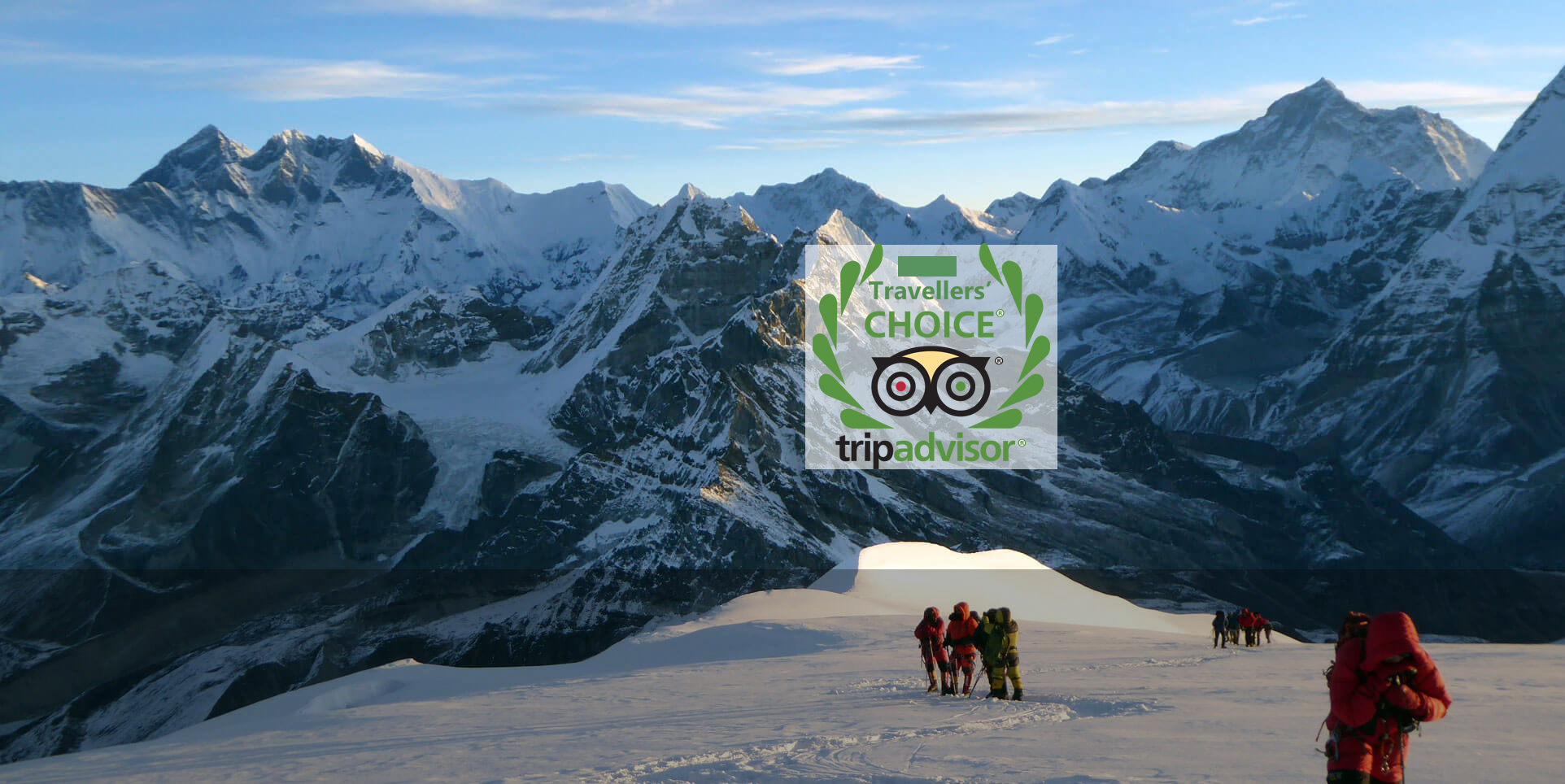
  • Summit attempt: the climbing is not technical in the early part as we ascend through several basins with short headwalls. The climb passes the false summit and finishes on an exposed ridge to the true summit for a spectacular view. Our strong sherpa team will fix ropes, break trail and make every effort to assist the group to reach the summit of the 8th highest mountain in the world (photo by Samuli Mansikka: climbers heading for the summit of Manaslu). back to top
  • Who is this trip for?
    • We encourage men and women from around the world, of all ages to join us as an individual team member or with your own group, whether that is your spouse, partner, friends, sibling, clients, colleagues, etc. Most of our members join as individuals, our team dynamics work well, and we are able to build successful and safe groups that enjoy trekking, climbing, and traveling together.
    • You should have previous high altitude climbing experience (such as Mustagata, Ama Dablam, Denali, Aconcagua, North Col or other.
    • To participate in this expedition you must be a very fit and active winter-walker-climber in good health. Prior to joining, please see your doctor and obtain the necessary permission and advice. back to top