.


Search Box
Testimonials .

Here is what Blake from Missouri, USA says:

"I was lucky to have chosen SummitClimb. Being in Nepal I realized what an amazing operation you guys run and how respected the leaders are.  I was proud to have been a part of this year’s expedition and look forward to many more in the future.

The leadership, organization and professionalism from everyone involved were great. Every problem was addressed immediately by the guides and solved seamlessly. The leaders were amazing and the porters they hired were first rate. Top notch work guys!"

Here is what Dennis from Utah says:

"It was quite an experience of which I will never forget. The views of the Himalayan Peaks were stunning and the people I met were awesome. You have a great team of guides and staff assembled and I enjoyed my time with each one of them and found them to be professional and well suited for the trip. The porters and cooks were quite impressive as well. Thank you for a wonderful, life fulfilling dream come true. Your program is awesome and I have told several people already of the quality of Summit Climb."

Here is what Patty had to say:

"What was good about the trek - the lodges, the peace and tranquility of the trek, the people of Nepal, the Yaks - EVERYTHING!!!


We loved it. We got to meet other trekkers and have more interaction with the people in Nepal. Each lodge was so unique and the owners and their children so special. I loved the quiet of the

trek... there were no motors running, the only sound was the people, dogs and yaks!


To prepare for the trip... walk - LOTS! Hike if you have any hills/mountains in your area but WALK - WALK - WALK. I felt stronger and stronger the farther we went. They may also want to practice walking with poles. I never used them and they may have helped on the way down with my knees.


What to expect - expect to enjoy the experience. Just let the little things go and open yourself up to living through one of the most amazing experiences in your life. Don't expect it to be like home... you are there to experience a different aspect of life, not your normal day to day existence.


I also LOVE the fact that you have added on Island Peak - I would have done that FOR SURE!!! I'm very disappointed we didn't have that opportunity, which just reinforces my drive to go back. You know, we swore this was a once in a lifetime trip and we didn't think we would ever go again BUT we loved it. I was really tired by the time we got home and it took me a couple of day before I REALLY appreciated all that we had experienced. It didn't sink in until we were home, going through the pictures, handing out the gifts we had bought, etc. when it hit me - It was one of the BEST things I have ever done for me personally and for Rob and I as a couple. Not everyone takes the opportunity to experience life and to live life, the trek make us both feel like we have lived life a bit more... but we're not done yet!!!


Let people know they can purchase almost ALL of their gear in Katmandu for much cheaper prices than in most countries and it is GOOD gear, not just junk. We would not have bought as much clothing, etc. to Katmandu if we would have known this. Not only would we have saved $$ BUT we would have supported more people in Katmandu. It may be a third world country, BUT the Nepalese know what trekkers and climbers need."


Here is what Wanda says:


"My concern about any problems in Nepal I heard about before the trip were non-existent in the areas we traveled. We did not witness any such disturbance. Traveling as a single female, I am probably a little more cautious than most but I have to say that never once did I feel concerned about my safety."


Here is what Elselien says:


"I think a good thing about this trip is having a trek included with the expedition. People really like having that look into the 'expedition world' but usually don't want the uncomfortable/cold suffering part themselves. They mostly like a night or two/three of camping but prefer (definately higher up) the lodges. Another good thing is that this trip is being organized by very experienced people who know how things work in Nepal and can offer solutions to unexpected problems. Trekkers usually feel that this trip is relaxed and the leaders are flexible when and where they can. This gives them a feeling of being more part of the team because their questions and opinion are being heard.


I really like the fact that it is fairly easy to achieve a high altitude while trekking the original Everest route from the 1920-1953 Everest expeditions.


It's a real good way to do a fun little climb in the big Himalayas. It has some scrambling, glacier crossing and a nice headwall. It's a fairly safe climb with a possibly high succes rate and a good summit (because of the small size and the scenery) feeling. Using the high camp makes the summit more achievable and that day a little easier.


The trip is ideal to start a Himalayan climbing career and whatever happens it will be a great and worthy experience."
Island Peak Climbing Expedition | SummitClimb
Island Peak, Trekking Peak
Main
Cost
Itinerary
Route
Leadership
Your Experience & Training
Personal & Team Equipment
Questions
Photo Gallery
Video Clips
News
Application (Int)
Application (US)
These photos were taken on our recent successful Island Peak expedition where we put 5 members and 2 Sherpas on the summit, and the team returned home safely. Photos in Island Peak slideshow: Dan Mazur, Elselien te Hennepe, & Valerie Hovland. For caption information on these photos, please visit our Island Peak photo gallery.
 
Please view our new Island Peak video clips. 
 
"Please "click here " to watch "Island Peak Video" a very good 7 minute film by Richard Pattison.
 
  • May be the "easiest" and most affordable way to see how you feel at 6000 metres/20,000 feet in just days.
  • One of the most beautiful places to take an up-close look at the high peaks around Everest.
  • Trip includes a hike to Everest basecamp and Kala Pattar, as well as this fun and "easy" trekking peak.
  • Trek to base camp on snow-free paths through green terraced villages, rushing rivers, suspension bridges, lush forests, stay in civilized 'teahouses' and camp in verdant meadows beneath towering peaks.
  • We help you buy and rent inexpensive mountain climbing, trekking, hiking, and walking gear, equipment, clothing, boots, shoes for sale, purchase and hire at affordable, cheap, low prices.
  • Leadership: Mingma Sherpa & Yangjie Sherpa, professional experts in trekking and climbing in Nepal.
  • Organizer: Dan Mazur, over 20 years organizing treks and climbs in Nepal.
  • Dates and Cost:
    • 7 to 28 April, 21 April to 12 May, and 10 to 31 October, (22 days in Nepal).
    • Price - Full Service Cost: $2950, £1850, €2150.GBP & EUR conversions as of {22-Jan-12}.
    • 5 day option: $1350. 19-23 April, 3-7 May, and 21-25 October.
    • Please Click Here
    • Please click the logo for payment options including credit card, cheque, bank transfer, etcetera.
Recent news: Our Everest Basecamp Nepal Trek and Island Peak climb has just returned from the mountains and the trip was a huge success. Please click here to view news of our expedition. Please also visit our "Archived News" for more stories of past trips.

Please click one of the links below to view the introductory information or just scroll down. (photo right by Valerie Hovland: Island Peak as seen from high camp at 5,500 metres/18,000 feet).

Island Peak Programme Description:
  • Introduction: In just 22 days, Island Peak is probably the easiest and most affordable way for you to obtain high-altitude experience and see how you feel at 6,000 metres/20,000 feet. It is also a beautiful place to take an up-close look at the high peaks around Everest, including the famous south face of Lhotse, Makalu and north side of Ama Dablam.
    • Our proposed schedule allows for acclimatization, training, practice and rest. Our expedition is cautious and careful, with excellent leadership, organization, Sherpa climbers, cooks and waiters, tasty food, the best equipment, a full kitchen and sleeping tents in basecamp and high camp (photo right by Dan Mazur: Our team on the summit on a beautiful sunny day on our October trek: Ms Elselien te Hennepe, Lakpa Kongle Sherpa, Kandu Sherpa, and Nima Dolma Sherpa. Lakpa Kongle Sherpa has led 25 climbs of Island Peak. That's Makalu, the world's 5th highest peak, in the background).
    • The trip includes a fun trek to Everest Basecamp, as well as to the top of Kala Pattar.
    • We teach you everything you need to know in special training sessions in base camp and the few days of climbing are mainly steep walking. The actual climbing on this fun trekking peak could be best described as steep walking/climbing, with team members roped-up.
    • You travel at a very careful pace without having to carry a heavy rucksack, while enjoying freshly prepared meals and lots of hot drinks, all important for acclimatization. The logistics are all taken care of, so just relax and enjoy the pure and pristine environment of the high Himalaya.
    • This expedition to Island Peak maximizes many prior expeditions, years of accumulated wisdom of the high Himalaya, a strong record of reaching the top of 7000 metre/23,000 foot & 6000 metre/20,000 foot peaks: Mustagata , Aconcagua, Island Peak, Ama Dablam, Kilimanjaro, Mt. Kenya, North Col, Lhakpa Ri, and many other summits. In addition to our growing number of successful worldwide expeditions, we have an intimate knowledge of the Nepalese officials who regulate the permit system and we know all of the liaison officers, sherpas, cooks, yak drivers, and hoteliers/restaurateurs personally. back to top

  • Leader and staff: During the trek, in basecamp and on the climb, our experienced staff is with you all of the way. Our friendly guides and trip leaders are experts at leading interesting groups of men and women throughout Nepal. In addition, they have an intimate knowledge of the Sherpa people, customs, temples and shrines in each picturesque village you stroll through. We must also give credit to our polite and highly experienced, hard-working trekking sherpas, cooking, and office staff.
    • On trek: Our guide, together with friendly and helpful sherpas, cooks and local people leading yak caravans carry all of your personal equipment, group equipment, and set up camp each day, prepare and serve delicious meals, so you can relax and enjoy the trek. You do not need to carry a heavy rucksack during the walk (photo right: Island Peak at the end of the valley, an easy walk from Dingboche along the Everest Trek at 4400 metres/14, 500 feet).
    • On the mountain: Our climbing guide and group sherpas will fix the route, set up the high camps and carry the group equipment, such as tents, stoves, etc. If you wish to help out, we welcome you to do so, otherwise just relax and focus on getting well acclimated and achieving your goals. You do not need to carry a heavy rucksack during the climb.
    • Sherpas: Our excellent sherpas have an intimate knowledge of the beautiful trek to Island Peak and the comfortable villages we will visit because this is their home region. They live in this land, grew up on farms here, have family and friends in the fun areas we will pass through, making our visit less of the usual tourist experience and more involved with the unique and genuine culture of the Khumbu Valley. They go out of their way to help make your visit remarkable, enjoyable along the way, and create lasting ties with the majestic landscapes and the inhabitants who reside there. This is a truly wonderful trek with friendly people. back to top
  • Everest National Park: The park covers an area of 1148 square kilometres in the Khumbu region of Nepal. This includes Island Peak and several other well known peaks such as Lhotse, Pumori, Mount Everest, and Ama Dablam. The surrounding area is a 'world biosphere reserve'. Since 1976 the park has served to safeguard unique cultural, physical and scientific values through sound conservation principles. Vegetation in the park varies from oak, pine and hemlock forests at lower altitudes to fir, juniper, birch and rhododendron woods at mid-elevations. Scrub and alpine plant communities with bare rock and glacier are found above the tree line. 22 species of rhododendron bloom during the spring (April and May) and much of the flora is colourful throughout the year. Wild animals most likely to be seen in the park are Himalayan tahr, goral, serow, musk deer, and well over 100 different bird species (photo right by http://www.americazoo.com/goto/index/mammals/420.htm: The Himalayan Tahr can grow to a metre high and weigh upwards of 100 kg).
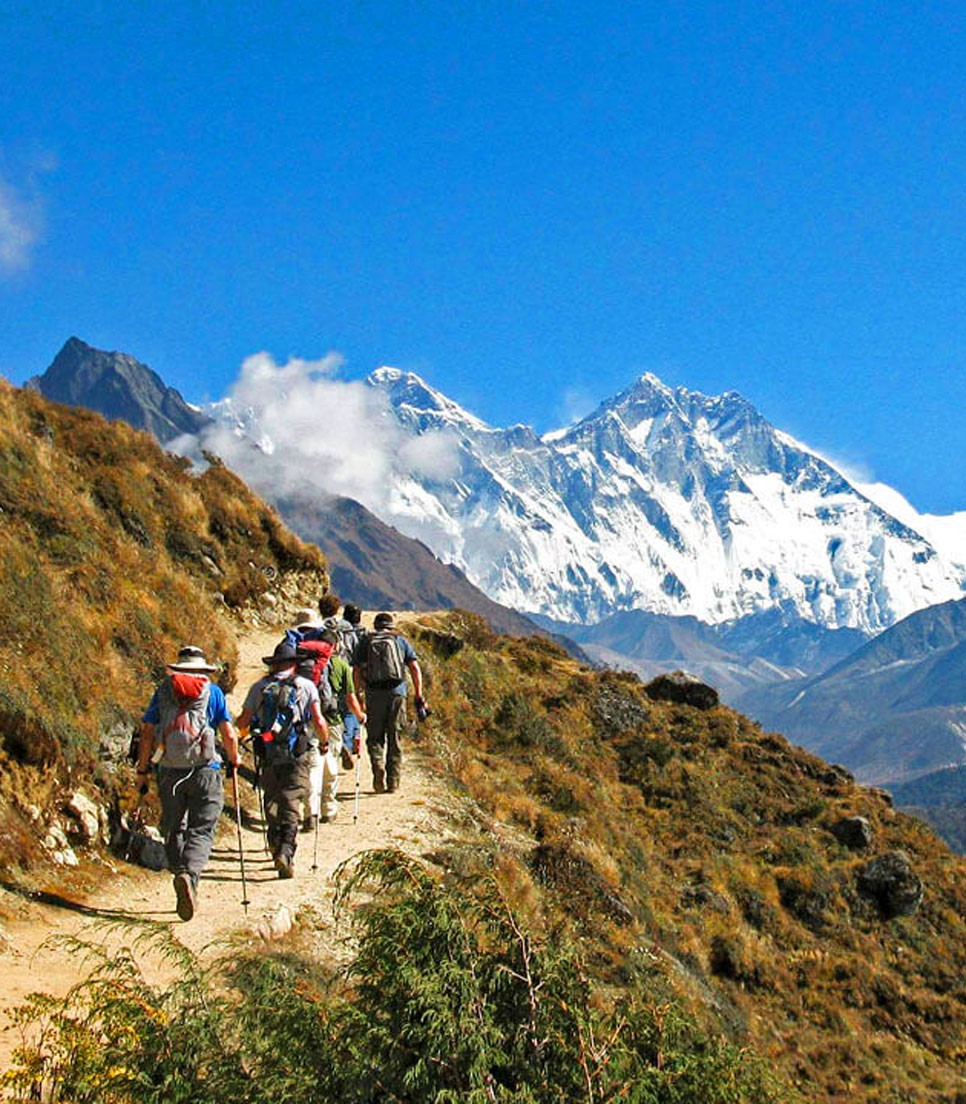
  • Trek to basecamp: This is one of the most beautiful treks in the world with ancient snow-free paths winding past green terraced villages, rushing streams crossed on swinging bridges and each night a comfortable 'teahouse' or a good tent pitched in a quiet pasture beneath the highest peaks in the world. Throughout the trek we eat delicious meals prepared by our skillful cooks. The trek will be moderately paced, allowing plenty of time for acclimatization, rest and site-seeing. Together we retrace the classic "Everest Approach March" made by Hillary and Tenzing Norgay Sherpa. The trek winds through some of the most spectacular mountain scenery on earth, where you can relax in exotic, friendly Sherpa villages. Our trusty yaks and porters carry all of your baggage, so you don't have to carry a heavy rucksack (photo right by Bruce Manning: Our Everest Nepal Basecamp trek is one of the most beautiful trips in the world). back to top
  • Island Peak: Affords an excellent opportunity to go high, but the actual climbing portion of the trip is limited to just a few hours of walking roped up on snow. The team enjoys the Everest Basecamp trek prior to climbing Island Peak, then on day 12 of the itinerary; at Dingboche we depart to the village of Chukkung, and then on to basecamp.
    • Basecamp: Island Peak basecamp is at 5,100 meters/16,700 feet. The trail from Chukkung follows gently along the moraine of the massive Imja glacier.
    • High camp: We walk uphill on a path over slabs and boulders for about two hours to Island Peak high camp at 5,500 metres/18,000 feet (photo right by Valerie Hovland: Members crossing the final snow plateau before the summit headwall. In the background is the famous Amphu-Lapsa pass and on the far right the north face of Ama Dablam).
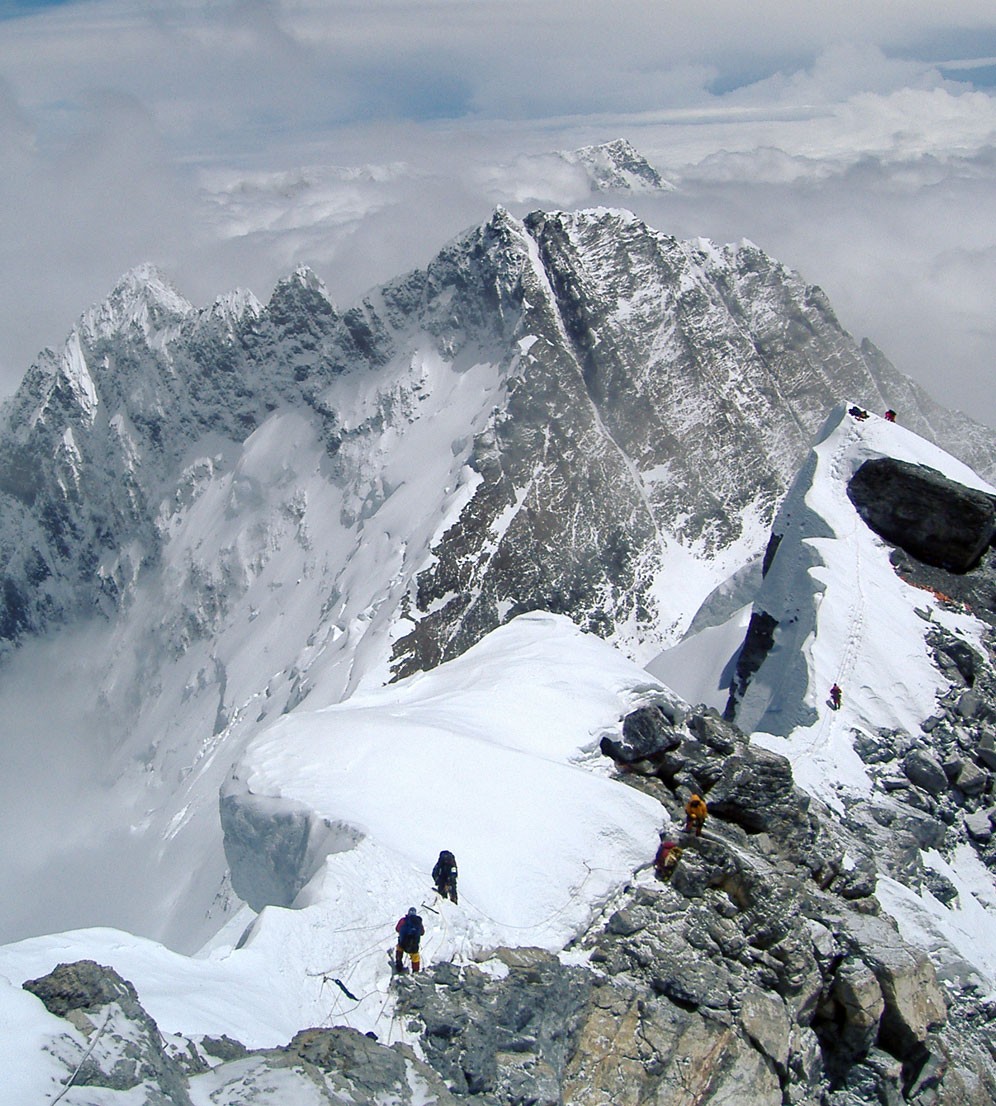
    • Summit day: Upon leaving high camp in the wee hours of the morning, the path to the summit is a good one on rocks and scree. Then we take out our ice-axe and put on our crampons for the final few hours of walking roped-up on the snow slopes to the summit. We cross a large snow plateau climbing a 34 degree headwall on snow using fixed ropes. We reach the summit shoulder and climb the final 15 metres to the summit using ropes. Once there, we can be treated to some very awe inspiring views of the 4 highest peaks in the world. back to top
  • Who is this trip for?
    • We encourage men and women from around the world, of all ages to join us as an individual team member or with your own group, whether that is your spouse, partner, friends, sibling, clients, colleagues, etc. Most of our members join as individuals, our team dynamics work well, and we are able to build successful and safe groups of people that enjoy trekking, climbing, and traveling together.
    • During the Island Peak expedition, we teach you all of the skills needed to ascend safely in special training sessions in basecamp. Our training covers glacier travel, ascending and descending ropes safely, etcetera. Irregardless of experience, everyone is welcome to join us and see how they feel at 6000 metres/20,000 feet.
    • Previous camping experience is beneficial to enjoying the trip, although not required.
    • It would be nice if you have some experience with foreign travel, although we are happy to advise and help you if this is your first time out of the country and, for many of our members, it is (photo right by Dan Mazur: Our trek team is having fun on the way to Namche Bazaar. What a great group!).
    • All of the work is done for you, such as cooking, carrying group equipment, setting up tents, etc. Yaks and sherpas will carry all of your personal items so you do not have to carry a heavy rucksack.
    • It is not necessary to be in extremely good shape to enjoy this peak. If you have fun walking for 3-6 hours up and down hills with a few 20 minute breaks mixed in, then you can accomplish this trek. back to top
Our team on the summit of Island Peak (Valerie Hovland). Looking down the ridge from the summit. In the foreground you can see someone standing on the 'shoulder' and just to the left you can see another group topping out on the headwall. In the background you can see another ridge of Island Peak stretching away into the distance, however our team climbs from the plateau to the lower left (Valerie Hovland).

Please "click" one of the links on the column on the upper right of your screen under "Island Peak" to learn more about our expedition.