.


Search Box
Everest Expedition Training Climb, Your Experience & Training | SummitClimb
Your Experience & Training
Everest Training Climb Main
Cost
Itinerary
Route
Leadership
Your Experience & Training
Personal & Team Equipment
Questions
Photo Gallery
Video Clips
News
Application (Int)
Application (US)
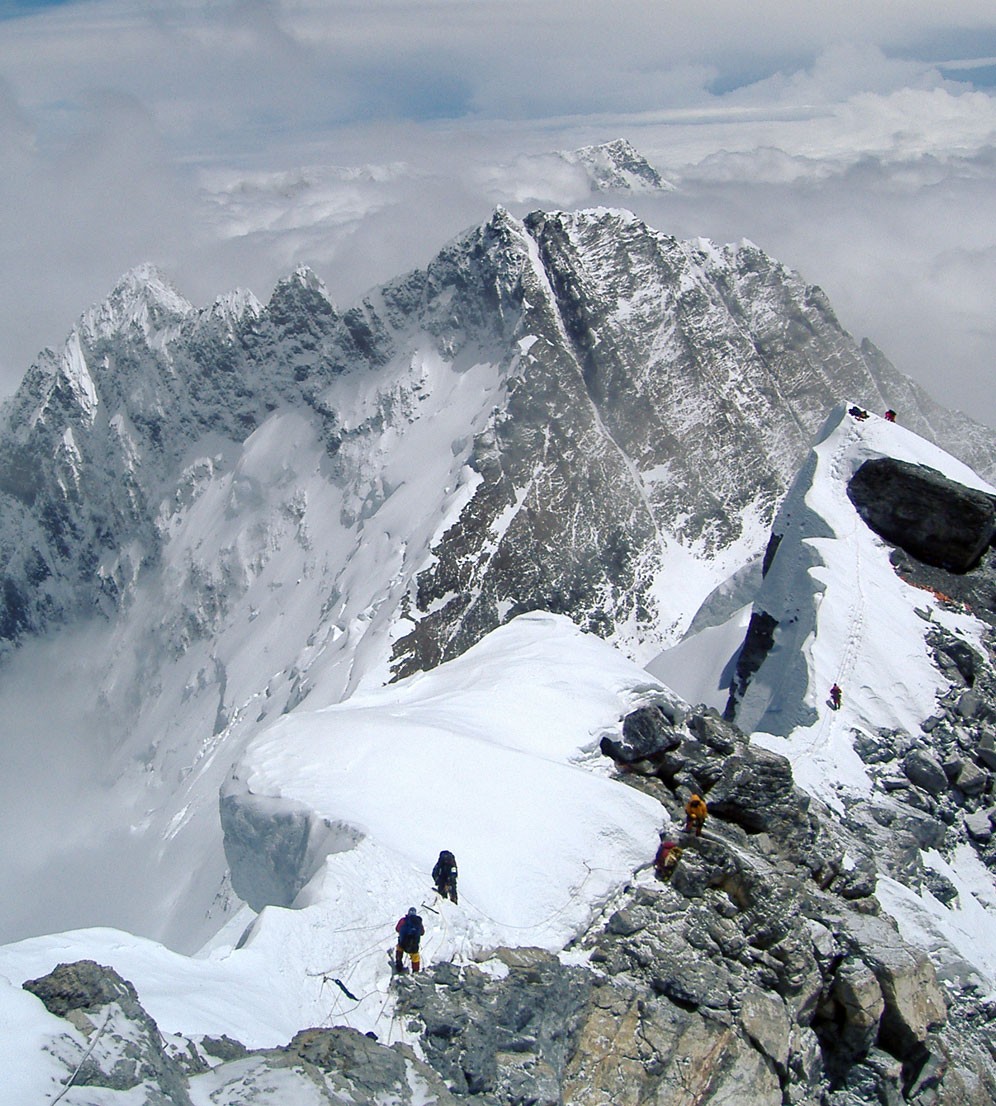
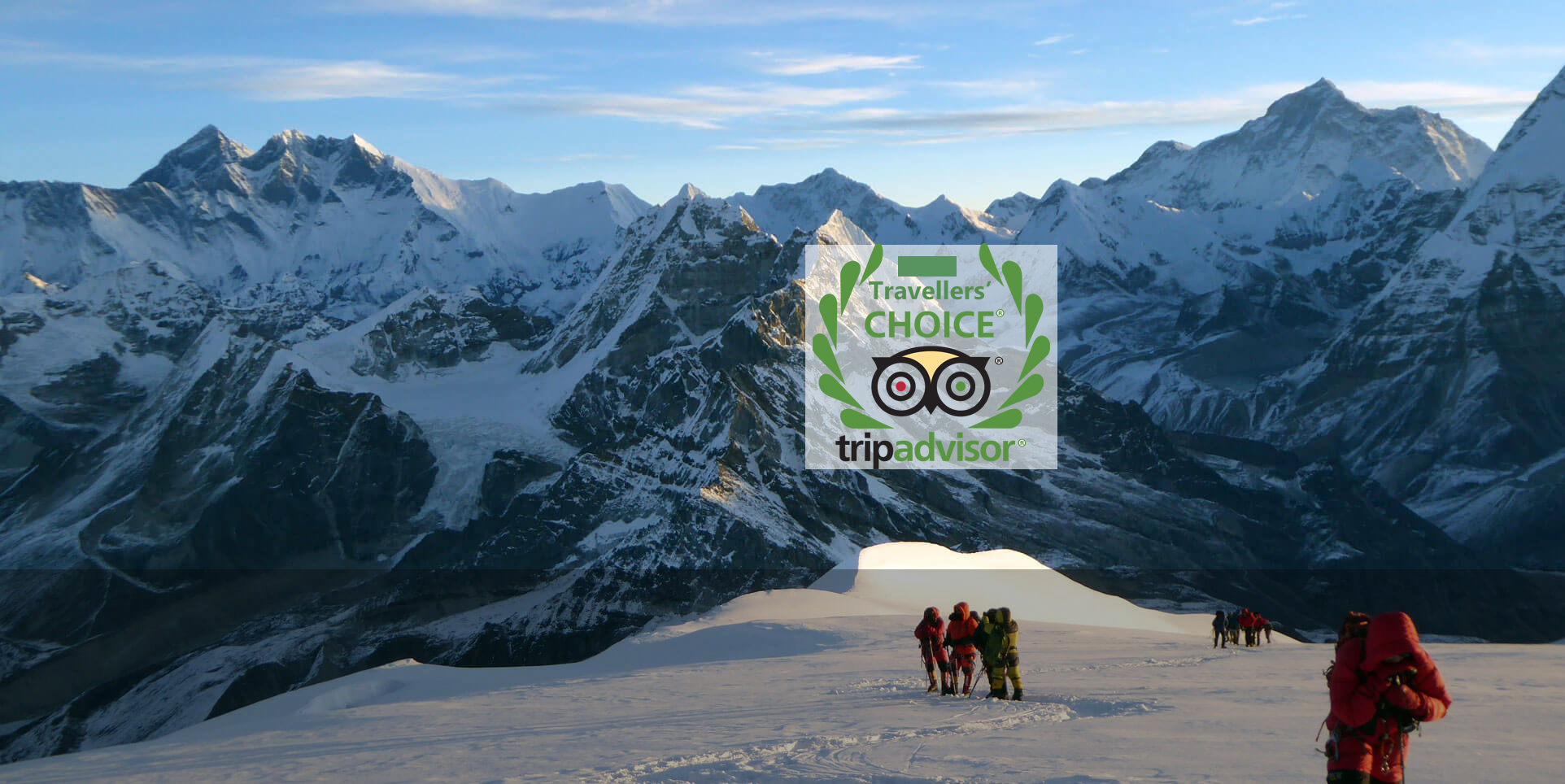
These photos were taken on our recent successful Everest Training Climb expedition where we put members and sherpas all the way to camp 3 on the Lhotse Face and the team returned home safely. Photos in Lhotse slideshow: Fabrice Imparato, Bruce Manning, Samuli Mansikka, Elselien te Hennepe, Richard Pattison & Tunc Findik. For caption information on these photos, please visit our Everest Training Climb photo gallery .
  • Full Service price includes: climbing training, Sherpas, hotels, domestic flights, basecamp, yaks, porters, ropes, tasty meals on trek, in basecamp and climb, group climbing equipment, tents, radios, satphones, etc.
  • Leader: Dan Mazur , Everest expert: 9 Everest expeditions.  Friendly and helpful, teaches everything you need to know. 
  • 2011 expedition: 100 % success rate: everyone reached camp 3 at 7300 m / 24,000 ft on the Lhotse Face.
  • 31 days (or 16 days climb only) in April or May 2012 or 2013.
  • Follow the same route as the climbers trying for the summit of Mount Everest while clipped to safety ropes.
  • May be one of the "easiest" ways to  reach 7300 m / 24,000 ft. Excellent chance to see how you feel at altitude. Experience the amazing Everest climbing route and beautiful trek to Everest basecamp.
  • Completing this climb is excellent preparation for eventually trying for the summit of Everest, at a much lower cost and for a shorter duration.
  • We teach you everything you need to know about climbing during the trip.
  • Climb the route first ascended by Sir Edmund Hillary and Tenzing Norgay Sherpa.
  • Do well and transfer to Everest.
  • The Nepal (south) side of Everest is warmer and less windy than the Tibet side of Everest.
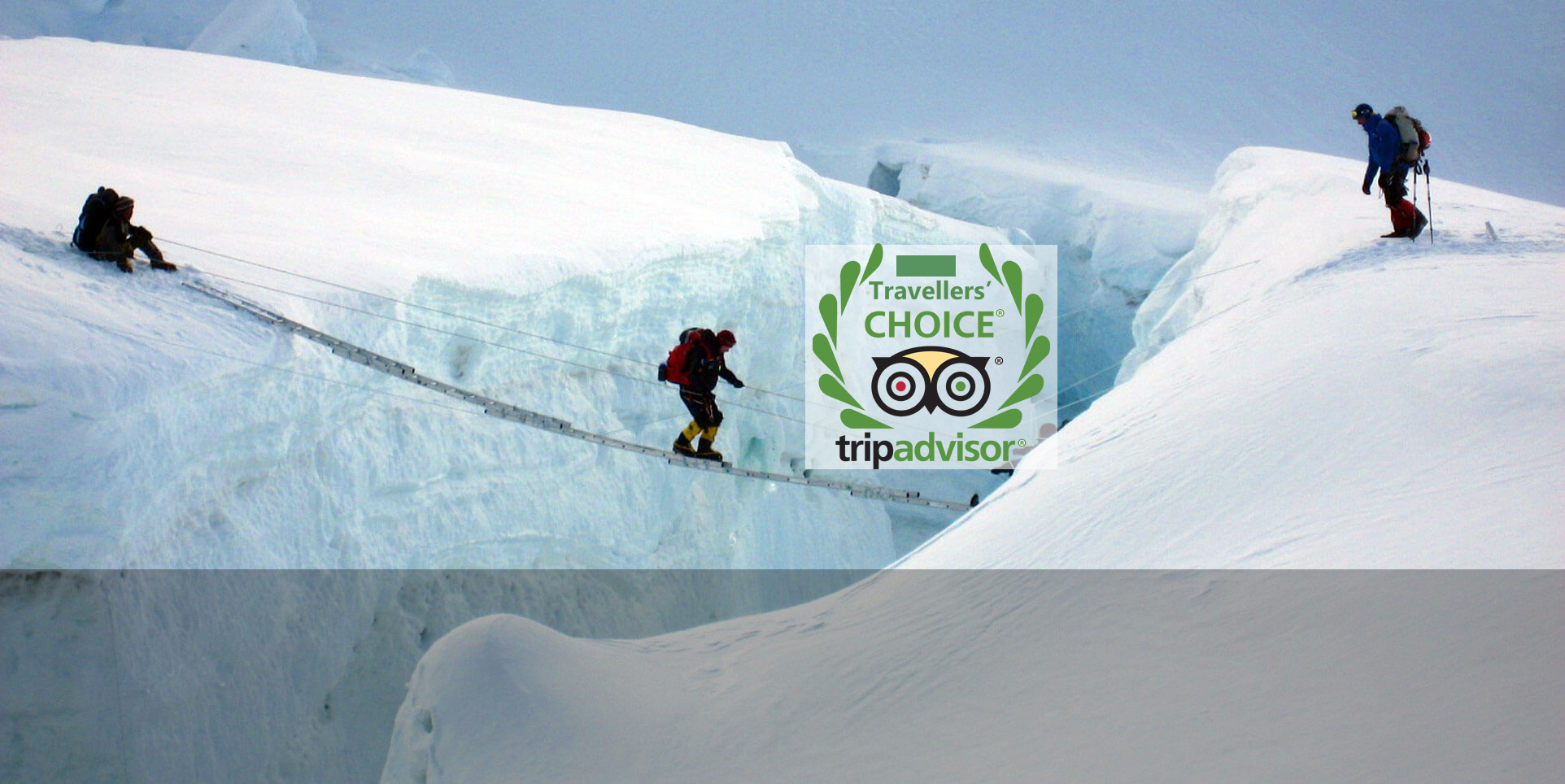
  • Cross the massive Khumbu Icefall above basecamp. Clip to well-fixed ropes on solid ladders over crevasses.
  • We help you buy and rent inexpensive mountain climbing, trekking, hiking, and walking gear, equipment, clothing, boots, shoes for sale, purchase and hire at affordable, cheap, low prices. 
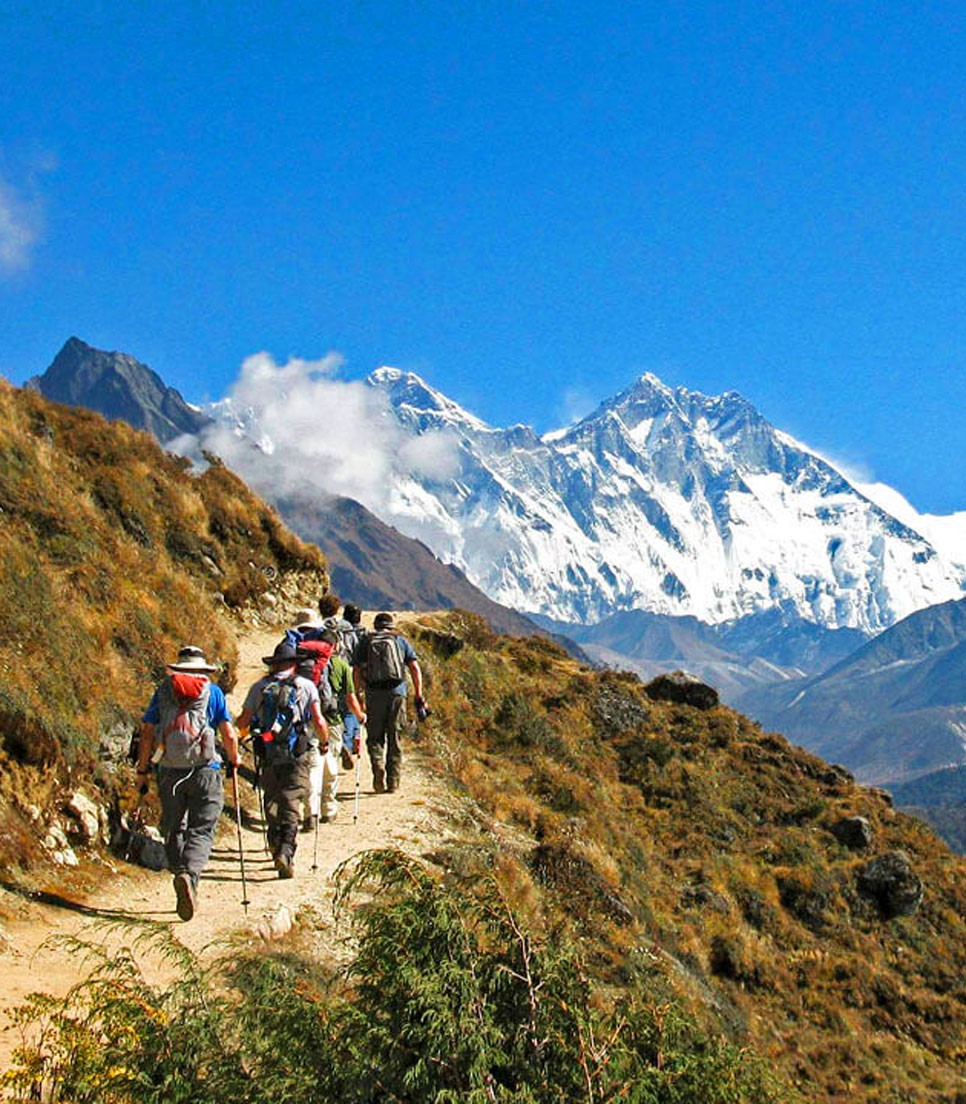
  • Trek to base camp on snow-free paths through green terraced villages, rushing rivers, suspension bridges, lush forests, stay in civilized 'teahouses' and camp in verdant meadows beneath towering peaks.
  • Dates and Cost:
    • 7 April to 7 May, and 21 April-21 May, 2013 & 2014. 31 days in Nepal.
    • Full Service Cost: $8,650, £5,350, €6,250. Currency conversions 8-Nov-11.
    • Sixteen day option: $6350, £3850, €4350.
    • Please Click Here
    • Please click the logo for payment options including credit card, cheque, bank transfer, etcetera.
Recent news: Our spring 2011 Everest Nepal Camp 3 Training Climb has just returned from a successful climb on the mountain. Please click here to view news of our expedition. Please also view our "Archived News" for more stories of past trips.
 
Please Click Here to watch the exciting video by Rob Bradley.  

Please "click" one of the links below to go directly to that information or scroll down.

Team Member Experience:

Extensive experience is not required for climbing to Everest camp 3. The most important thing is for members to be in adequate walking fitness. You may attempt this climb as a novice and we will teach you what you need to know. No further experience is required.

Our leaders and our team-climbing-sherpas are there to ensure you make it up to camp 3 and back down safely.

We welcome you to join our expedition as an individual and most of our members do. We plan to assemble our team members into groups so you should not have to climb alone, although occasionally it may happen. By the way, we are unable to accommodate 'soloists' who are not willing to climb together with other team members or sherpas from our team. The main expectation is that members will be prepared to climb with a team member or sherpa above basecamp if possible. This practice ensures that the entire team has a fun, successful, and safe time on the mountain. back to top

Fitness and Health:

To participate in this expedition you must be a very fit and active winter-walker-climber in good health. Prior to joining our group, please see your doctor and obtain the necessary permission and advice, as well as medications for travel in extremes of altitude, and also for exotic locales.

Note: You can purchase all necessary medicines inexpensively with no doctor's prescription in Kathmandu. Please make sure you have physically trained yourself very thoroughly before joining this climb. For a list of the medications we recommend you purchase, please click here. We look forward to climbing together with you! back to top

Training Prior to the Expedition:

  • Firstly, you should always consult your doctor before starting a rigorous exercise plan.
  • In the beginning, to see how you handle the training, and to avoid muscle strains that could slow your training down, you may wish to use shorter more frequent but less taxing workouts, and take more rest. After you get "up to speed" as it were, you could increase the rigour. Older climbers and walkers please take note of the latter. Also remember that swimming is an excellent form of training because it does not put stress upon your joints. Thank you.
  • In order to train well for your trip you should work toward exercising 3 to 4 times a week for between 40 minutes and an hour and a half each time. You should expect to work hard, and try to keep your heart rate quite high and your breathing quite heavy.
  • Adequate rest and a well balanced diet are also essential to avoid injury and illness before the expedition. You should sleep at least 8 hours per night, and eat 3 nutritious meals a day. Don't forget that you will perspire when you train, so try to drink at least 4 litres/quarts of water a day.
  • You may wish to engage the services of a personal trainer, who could help you to fine tune your fitness to a higher level while minimizing strain and maximising your potential in ways you might not have imagined. Personal trainers can also be a great motivator, as you and the trainer have your weekly session, thus you will feel an incentive to complete your planned fitness programme for that week.
  • Please allow us to introduce you to our friend Ben Palmer. Ben is nice person and an avid climber, on rock, ice, in Scotland, the Alps and the Himalaya. Ben is uniquely qualified as a personal trainer, with four years experience as a Premier Global Level III Personal Trainer (The highest qualification available).
  • For more information on how to train for the expedition or for a detailed exercise regime please email Ben: ben@benpalmerfitness.co.uk . Thank you very much.
  • Utilising both gym equipment and the great outdoors will provide a more balanced exercise programme. You should try to accomplish at least half of your workouts outside. This could include walking and running (On stairs and hills too) and cycling, but above all should be fun! Hillwalking and climbing with a pack weighing 5-10 Kilos/10-20 pounds is essential. If you don't have hills, why not go for stairs, bleachers, viewing stands, stadiums, even the stairways in tall buildings? Don't forget to spend time directly working the muscles of the legs, back and shoulders, and remember that your own body weight can be just as effective as weights, or machines.
  • About 6 weeks before the expedition departure date, you may wish to do 1 full day each week of hill walking, climbing or an equivalent, with a light rucksack. On that day, you would want to eventually work toward six-eight hours of continuous walking or climbing up and down hill, with 4 to 6 separate ten minute breaks and a 1/2 to 1 hour lunch break midway through.
  • To minimize the chance of injuring yourself, consider starting with a half day and then if you do well, increase to 2/3, then eventually to a full day, once a week.
  • We want you to arrive for your expedition in top shape, so please take plenty of rest and do not over-do it.
  • Hint: when carrying a rucksack while descending, walking, or climbing down-hill, try carrying a bit less in your rucksack in order to save your knees. Many trainers advise carrying water bottles up the hill then emptying them at the top so your rucksack is lightened for the trip down. back to top

Training During the Expedition:

  • Upon arrival in Kathmandu and in base camp, all members are requested to participate in one to two days of orientation to how the trip will be operated. There will be plenty of time for discussion, question answering, and for equipment review and purchasing. Training will be conducted both in Kathmandu and in basecamp in the areas of climbing techniques, glacier travel, rope fixing, ascending, descending, safety techniques, rappels (abseils), belaying, medical equipment and procedures, communications equipment, camping techniques and high-altitude cooking. For the expert and beginner alike, it is important to review these techniques in order to enhance skills, ensure safety-awareness, and work together as a team.

We hope that you will arrive for your Everest Training Climb Expedition in good health, both mentally and physically prepared, so we can work together as a team and have a successful expedition.